
by Arthur Billingsley (December 2025)
In Borno State, Nigeria, Fatima Kunduli used to treat sixty children a day for malnutrition and malaria. Her clinic is now closed. In South Sudan, children are walking hours through the bush to reach cholera treatment centers. At least five have died along the way. In Johannesburg, a sign hangs on the door of the Engage Men’s Health clinic: “Regrettably our clinic is temporarily closed.” In Tanzania, a doctor named Said Bujari watches tuberculosis spread because the logistics for transporting test samples no longer exist. “Everybody is in panic,” he says. “Clinical services are paralyzed.”
These are not statistics. These are the first casualties of Executive Order 14169, signed January 20, 2025, a policy decision made in Washington that will kill two hundred thousand additional children this year alone.
Forward Defense: What We Built and Why
We have been here before. After World War I, America retreated from international engagement, rejecting the League of Nations and withdrawing into isolation. Within two decades, that retreat helped enable a global catastrophe that cost sixty million lives. The architects of the post-World War II order understood the lesson: American security depends on American engagement. Threats contained abroad never become crises at home.
Global health infrastructure was built on this principle. Every dollar spent preventing disease overseas was a dollar not spent treating pandemic domestically. Every outbreak contained at its source was an outbreak that never reached American shores. Every health worker we trained, every clinic we funded, every vaccine we delivered created a surveillance network spanning the globe, watching for threats before they could become catastrophes.
Think of these clinics not as charities, but as distant early warning stations. A health worker in rural Congo identifying a novel hemorrhagic fever is no different than a radar operator in Alaska spotting a bomber. Both buy us time. Both protect American lives. By dismantling this network, we have not stopped “aid.” We have turned off our biological radar. We are now flying blind in a world of emerging pathogens.
This was Forward Defense: strategy disguised as compassion, investment marketed as charity.
The returns were extraordinary. A 2025 Lancet study documented the impact: between 2001 and 2021, USAID-funded interventions prevented 91 million deaths, including 30 million children under five. These programs achieved a 65 percent reduction in AIDS-related deaths, a 51 percent reduction in malaria deaths, and a 50 percent decline in deaths from neglected tropical diseases.
Ninety-one million lives saved. When examined, American global health investment may be the most successful foreign policy initiative in our nation’s history.
Beyond biology, there is stability. Mass disease breeds state failure. When millions of children survive, they grow up in nations less prone to the radicalization that thrives in desperation. We invested in health to avoid investing in wars.
This architecture took decades to build. It took months to destroy.
The Dismantling We Chose
In January 2025, the administration froze all foreign assistance. By March, eighty-three percent of USAID programs had been terminated. The agency’s workforce collapsed from over ten thousand employees to fewer than three hundred. By May, 233,818 development workers across 159 humanitarian agencies worldwide had lost their jobs.
The numbers are staggering. In Kenya alone, 54,000 healthcare workers have been suspended and more than 230 health projects disrupted. In South Africa, over 8,000 skilled healthcare workers have lost their jobs. In Mozambique, 21,000. Across the continent, clinics that served hundreds of patients daily have gone dark. Supply chains have shattered. Drugs sit in warehouses while patients die for lack of them.
The Gates Foundation’s December 2025 Goalkeepers Report confirms the result: 4.8 million children will die before their fifth birthday this year, an increase of 200,000 over 2024. This is the first increase in child mortality this century. If current cuts continue, the Lancet projects 14 million additional deaths by 2030, including 4.5 million children under five.
We knew what would happen. We have the models. We did it anyway.
The Counterargument and Its Failure
The architects of this policy offer justifications. None survive scrutiny.
The proponents of Executive Order 14169 built their case on a foundation that resonates with many Americans: fiscal responsibility and national prioritization. It is valid to ask why U.S. tax dollars fund clinics in Tanzania when hospitals are closing in rural Tennessee. The arguments against “forever aid”, that it can foster dependency, invite corruption, and sustain bloated international bureaucracies, are not baseless. The stated desire for an “America First Global Health Strategy” that transitions responsibility to local nations is, in principle, a sound objective.
However, the implementation of this policy reveals a catastrophic confusion between renovation and demolition. The administration argued that bilateral agreements would be more “efficient,” yet there is no economic logic in abandoning $9 billion of invested infrastructure that was already yielding the highest returns in government history. We did not trim the fat; we severed the nerves.
The claim that immediate withdrawal promotes “local ownership” is equally flawed. True ownership requires a baton pass, not a cliff. By abruptly terminating the salaries of 54,000 Kenyan health workers and thousands more across the continent, we did not incentivize local independence—we induced systemic collapse. You cannot foster self-sufficiency by destroying the very scaffolding required to build it.
Most critically, the justification that this policy protects American interests is the most dangerous fallacy of all. By dismantling these networks, we didn’t just save 1.1 percent of the defense budget; we fired the sentries guarding our own gates against the next pandemic. The result is not efficiency. It is a strategic surrender that leaves the United States blinder, weaker, and morally diminished.
The mathematics demolish the rhetoric. A program manager from South Africa’s Gauteng province described the reality: “This was abrupt and mostly unclear. We couldn’t maintain treatment adherence support for many. There was no time to adapt before services were pulled.” Patients walked hours to clinics only to find no staff available.
This is not efficiency. This is abandonment.
The Vacuum We Created
While America retreats, China advances. Beijing has committed $50 billion to African development for 2025 through 2027, a $10 billion increase from its previous commitment. This includes joint medical centers, 2,000 deployed medical personnel, and direct support for the Africa Centres for Disease Control and Prevention. China has pledged an additional $500 million to the World Health Organization, positioning itself as the responsible partner in global health governance.
Since 1963, China has dispatched 25,000 doctors to 48 African countries. Its Health Silk Road initiative constructs hospitals, trains medical personnel, and establishes pharmaceutical manufacturing in partner nations. These are not temporary programs. They are investments designed to create long-term relationships and dependencies that will outlast any single American administration.
Every clinic America closes, China offers to rebuild. Every health worker America fires, China offers to replace. Every child America abandons, China offers to save.
This is soft power: the whole-of-government approach to international relations that builds influence through sustained engagement. The relationships we spent decades cultivating are being transferred to our strategic competitors. We are not merely losing a health network. We are losing a generation of goodwill, influence, and intelligence that cannot be rebuilt on any timeline relevant to current geopolitical competition. Health infrastructure is not just influence, it is intelligence, early warning, and leverage.
Health infrastructure does not merely save lives; it embeds access, trust, and early information flows that shape global power.
The Security We Are Destroying
The Famine Early Warning Systems Network, which has provided life-saving food crisis predictions since 1985, has gone offline. Disease surveillance capacities have been degraded across fifty countries. The World Health Organization estimates these cuts could lead to more than 10 million additional HIV cases and 3 million HIV-related deaths. Malaria deaths in high-burden countries could rise by 20 percent. Five hundred thousand tuberculosis patients may go without treatment this year alone.
The consequences are not abstract. STOP Spillover, a USAID program that mapped pandemic-potential viruses and tracked human infections, has been frozen. American intelligence agencies used this data for risk assessments and vaccine planning. That feed has gone dark. The WHO’s 2025 tuberculosis report documents measurable drops in case detection and slower contact investigations; blind spots forming in real time for an airborne pathogen that crosses borders on commercial flights. Africa CDC reports a 40 percent rise in infectious disease outbreaks on the continent between 2022 and 2024, precisely as American surveillance funding collapses. Africa CDC Director Jean Kaseya’s warning is unambiguous: we are “laying the groundwork for another pandemic.” While no outbreak has yet been proven to have gone undetected longer solely because of these cuts, that sentence should terrify you. We will not know we missed the signal until patients appear in American emergency rooms with a pathogen we should have seen coming months earlier. We have not saved money. We have purchased ignorance.
When the next novel pathogen emerges, and it will emerge, we will be blinder, slower, and more vulnerable than at any point in modern memory. Forward Defense has been abandoned. We have pulled back our sentries and dismantled our watchtowers.
The Choice That Defines Us
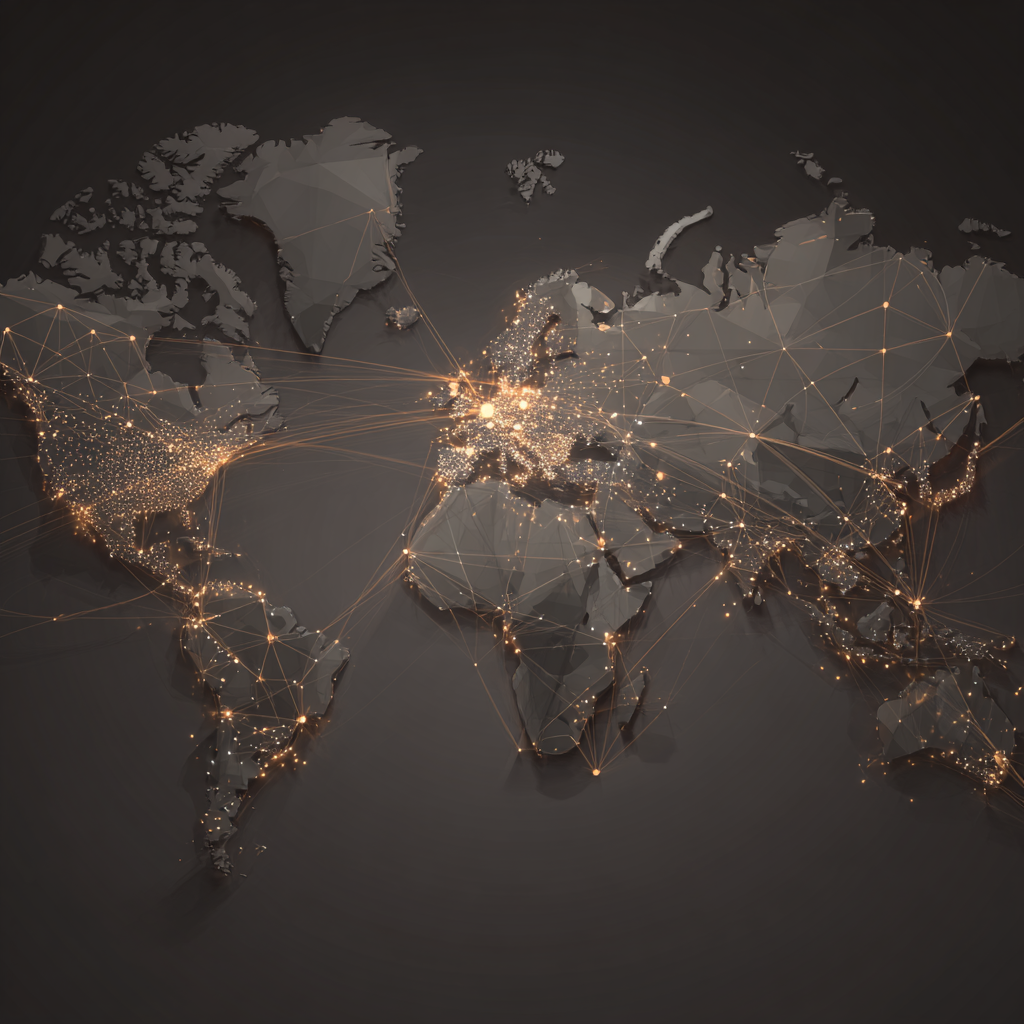
Restoring American global health leadership would cost approximately $9 billion annually. That is roughly 1.1 percent of the defense budget. It is less than the cost of a single aircraft carrier. It is a rounding error in federal spending that would save millions of lives, maintain American influence across the developing world, and preserve the surveillance infrastructure that protects Americans from pandemic disease.
Bill Gates titled his foundation’s 2025 report “We Can’t Stop at Almost.” We almost ended preventable child deaths. Almost eradicated polio. Almost wiped malaria off the map. Almost made HIV history.
Almost.
Every society is judged by how it treats its most vulnerable. Every empire that failed this test lies in ruins. The children walking through the South Sudanese bush toward shuttered clinics are walking the same path America is choosing: toward isolation, toward abandonment, toward a future where threats grow unchecked because we decided that their lives were not worth the cost of prevention.
Fatima Kunduli’s clinic remains closed. The children she used to treat are still getting sick. Some of them are dying. And somewhere in Beijing, planners are drafting proposals for a new Chinese-funded health center in Borno State.
Two hundred thousand children’s lives were lost because America chose abandonment over prevention. If you are a citizen, a voter, a policymaker, the decision is yours. Register your choice with your voice and your vote.
REFERENCES:
Executive Office of the President. “Reevaluating and Realigning United States Foreign Aid.” Executive Order No. 14169, 90 Fed. Reg. 8619 (January 30, 2025). https://www.federalregister.gov/documents/2025/01/30/2025-02091/reevaluating-and-realigning-united-states-foreign-aid.
World Health Organization, Global Health Estimates 2025: Disease Burden, Mortality, and the Impact of Health System Disruptions (Geneva: World Health Organization, 2025). https://www.who.int/data/global-health-estimates
The Lancet, “Global Health Financing, Mortality Trends, and the Consequences of Aid Retrenchment,” The Lancet 405, no. 10492 (2025). https://www.thelancet.com
Bill & Melinda Gates Foundation, Goalkeepers Report 2025: We Can’t Stop at Almost (Seattle: Bill & Melinda Gates Foundation, 2025). https://www.gatesfoundation.org/goalkeepers/report/2025-report/
Billingsley, Arthur. “American Myths, American Realities: From Reckoning to Reconstruction”, Jacksonville, FL: COGNOSCERE LLC, 2025. https://www.amazon.com/dp/B0G5WRQ66D/
Cilliers, Jakkie. “The Toll of USAID Cuts on Africa.” ISS African Futures, February 24, 2025. Accessed December 15, 2025. https://futures.issafrica.org/blog/2025/The-toll-of-USAID-cuts-on-Africa.
Africa Practice. “USAID Cuts: Six Months On.” Africa Practice, July 30, 2025. Accessed December 15, 2025. https://africapractice.com/insights/usaid-cuts-six-months-on/.
Africa‑US Forum. “Trump’s Ending of USAID and African Government Responses.” Africa‑US Forum, May 6, 2025. Accessed December 15, 2025. https://www.africa-usforum.africa/trumps-ending-of-usaid-and-african-government-responses/.
Guglielmi, Giorgia. “Trump Cuts Damage Global Efforts to Track Diseases, Prevent Outbreaks.” STOP Spillover, Science, March 24, 2025. Accessed December 15, 2025. https://www.science.org/content/article/trump-cuts-damage-global-efforts-track-diseases-prevent-outbreaks.